Houses · 3 min read
Hooten Young Twists a Delta Force Memoir Into Smoke: The Gothic Serpent Culebra Ships Today
Three 6 x 38 cigars braided in candela and San Andres barber-pole, named for the 1993 Battle of Mogadishu, and gone almost as fast as it lands.
By CigarMind Editorial ·
Hooten Young announced the Gothic Serpent Culebra on October 15, and it ships to retailers on October 16, which is to say the window between hearing about it and losing it to a faster click is roughly one day. The release is a true culebra: three 6 x 38 cigars twisted together into a braid, each dressed in a barber-pole of Ecuadorian Connecticut-seed candela and Mexican San Andres wrapper. The lead cigar of the trio carries the name The Gothic Serpent. Production runs through Córdoba & Morales in Nicaragua. Pricing is set at $25 per culebra, and retailers receive them in sets of three culebras, nine cigars in total. Only 1,000 culebras exist across the entire run.
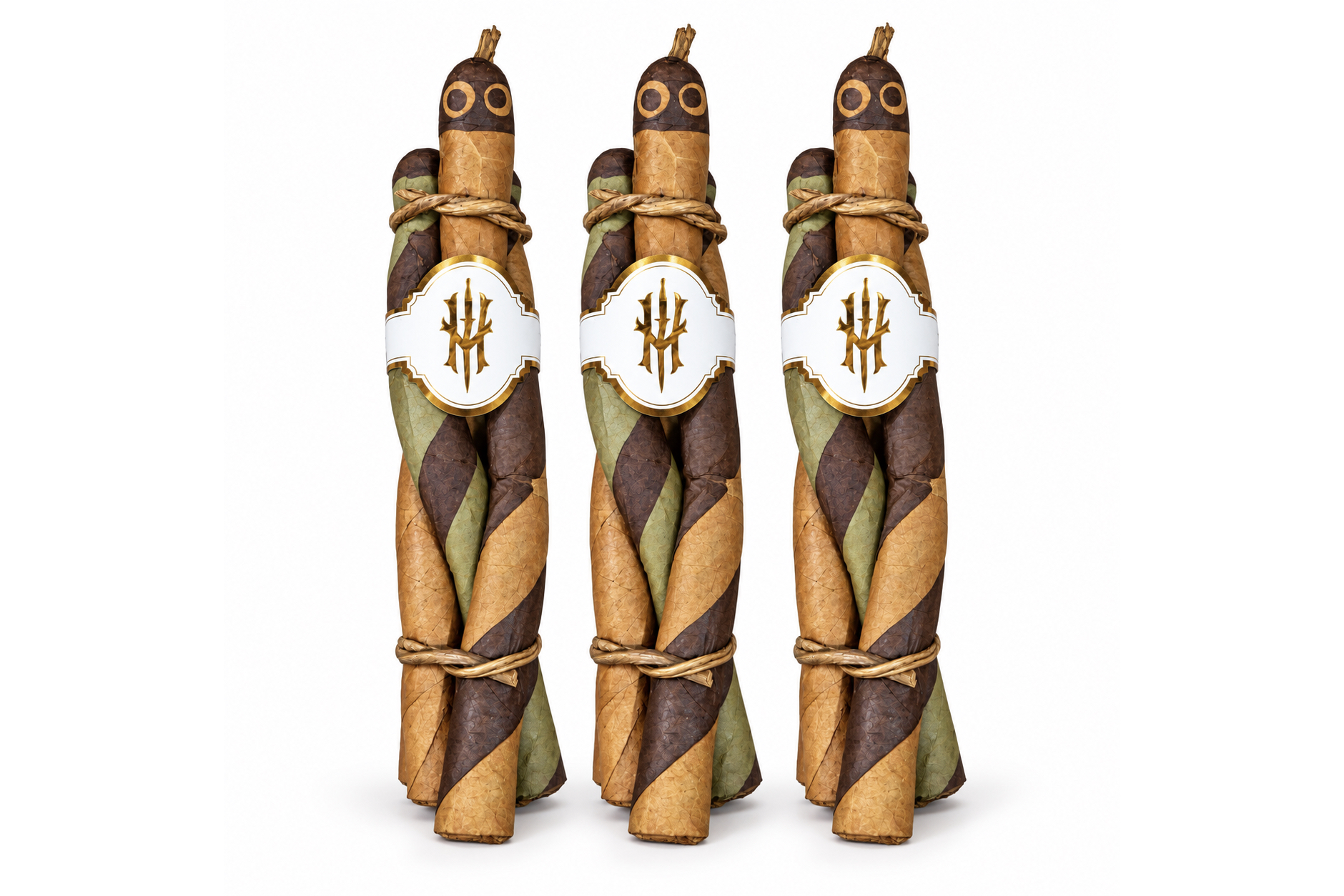
The name is not decorative. Operation Gothic Serpent was the 1993 U.S. mission in Mogadishu, Somalia, the two-day fight known as the Battle of Mogadishu after a raid to capture lieutenants of warlord Mohamed Farrah Aidid ended with two Black Hawks shot down and eighteen Americans killed. Co-founder Norm Hooten is a former Delta Force operator who served in that mission, which makes the name closer to a signature than a marketing choice. It continues a pattern: the Midnight Hammer line takes its name from the 2025 strikes on Iranian nuclear sites. Military history as naming convention is a crowded shelf in premium cigars, but few houses have the founder's own service record standing behind the label.
For smokers too young to remember the news footage, the battle entered popular memory through the book and film Black Hawk Down, which dramatized the October 3 and 4 raid and the overnight stand by U.S. forces in a hostile city. The operation lasted about seventeen hours and reshaped American foreign policy debates for a decade. Naming a cigar after it invites the obvious question of taste, and there is no consensus answer; what can be said is that a limited cigar at $25 with a one-day production number reads more like remembrance than exploitation. Whether a smoker wants history attached to a quiet half hour is a personal call, and the brand is clearly betting many do.
The format carries its own history, some of it firmer than the rest. The culebra, Spanish for snake, braids three slim cigars so they rest and age as one object, then separate at the moment of smoking. Cigar lore holds that the style began as a factory ration: workers received their daily smokes twisted together, and the unusual shape made it obvious which cigars belonged to employees rather than inventory, discouraging resale. That story is repeated constantly and documented poorly, so treat it as lore rather than record. What is verifiable is the practical appeal: a culebra is three cigars in one wrapper of ceremony, and untwisting one before lighting remains one of the small theater pieces the hobby offers.
The other quiet story here is candela. The green wrapper leaf, cured quickly at high heat so the tobacco keeps its chlorophyll, was once the dominant taste of the American market, the so-called American Market Selection that defined mid-century mild cigars. It fell hard out of fashion as darker, sweeter wrappers took over, and for years candela survived mostly as a curiosity. Lately it has returned as the light half of barber-pole constructions, where its grassy, slightly sweet character and slow burn can argue against a San Andres maduro stripe. The Gothic Serpent Culebra is the latest entry in that comeback, and a reminder that a wrapper technology written off as a relic keeps finding new employment.
What does the drop mean for the smoker? Arithmetic first: 1,000 culebras split into roughly 333 retailer sets means most shops will see a single allotment, and the savvy ones will hold it for regulars. At $25 for three 6 x 38s, the per-cigar cost lands near eight dollars, reasonable for the format. Approach it as three sessions rather than one, untwist the braid gently, and give the separated cigars a little rest before lighting, since twisted formats can burn unevenly straight off the truck. If the candela and San Andres pairing performs as promised, this is a smoke worth the scramble, and the history, whether it moves you or merely interests you, is printed on the label regardless.
Sources
- halfwheel.com
- cigardojo.com
Makers in this read
More Houses