Education · 2 min read
Flat Line, Moving Currents: What July's Import Numbers Are Hiding
American premium cigar imports are up just 0.5 percent through July. Beneath that calm headline, Honduras keeps climbing, the Dominican Republic keeps sliding, and one storied factory explains most of the movement.
By CigarMind Editorial ·
The headline number for the American premium cigar market barely moved. According to figures released by the Cigar Association of America, the United States imported 242.8 million premium, handmade cigars through the end of July 2026, an increase of 0.5 percent over the first seven months of 2025. That is the definition of a flat market, and after the pandemic-era surge, flat is beginning to look like the floor rather than the ceiling. For context, the country imported 429.8 million premium cigars in all of 2025, the fifth consecutive year above 400 million. In 2019 the total was 338 million, and not long ago 300 million was the benchmark for a genuinely good year. The boom has cooled, but it has not deflated.
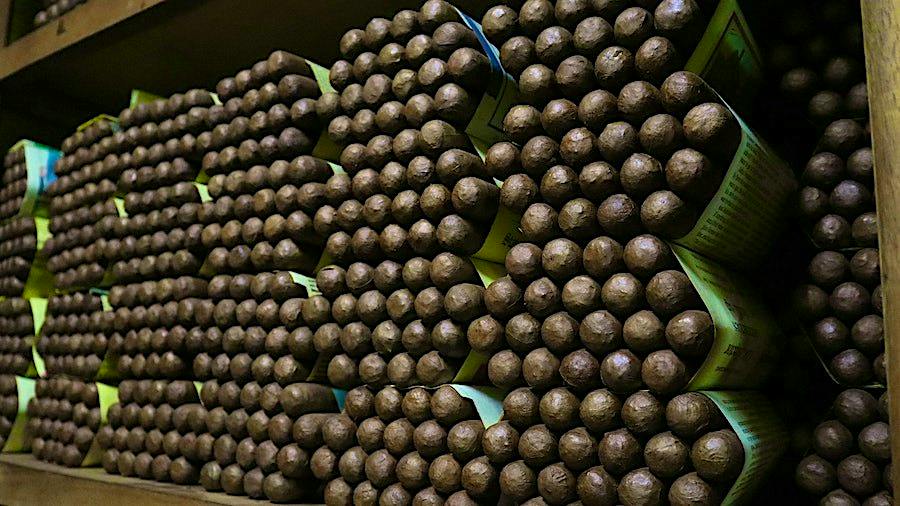
Nicaragua remains the undisputed center of gravity. It shipped 148.3 million cigars to American shores through July, a flat result against the same period last year, and it still accounts for 61 percent of all premium imports. As Cigar Aficionado noted when the first-quarter numbers arrived, Nicaragua makes more premium cigars for the American market than every other producer combined. A five-point swing in its numbers would move the entire national total, which is exactly why its current stillness matters: the top of the market is not growing, and it is not shrinking. It is holding.
The Dominican Republic tells a different story. It shipped 46.9 million cigars through July, good for 19.3 percent of the market, but that represents a decline of 6.9 percent compared with the first seven months of 2025. Cigar Aficionado traced the drop directly to one operation: Tabacalera de Garcia Ltd., a Dominican operation of unusual scale whose rolling floor has produced Montecristo, Romeo y Julieta, and H. Upmann for decades. That factory was unable to ship cigars to the United States during the first quarter, and the majority of its production was shifted to Nicaragua and Honduras, specifically to Plasencia and A.J. Fernandez. Company statements have characterized the interruption as temporary; even so, the Dominican figures for July still carried the drag, which points to a slow restart, continued diverted production, or both.
Honduras, meanwhile, is the only major producer posting gains, and the gains are large. It shipped 44.9 million cigars through July, up more than 11 percent over last year, and now holds 18.4 percent of the American market. The growth has been consistent all year: up 12 percent in the first quarter, up 10 percent through June, up better than 11 percent through July. That consistency is what makes the first-quarter milestone so significant. Honduras passed the Dominican Republic to become the number two source of American premium cigar imports for a three-month stretch, something the Cigar Association of America says had never happened before. Through seven months the gap has narrowed to two million cigars, 46.9 million for the Dominican Republic against 44.9 million for Honduras.
What is driving the Honduran rise is partly arithmetic and partly real momentum, and the two should not be confused. The arithmetic: the displaced production did not leave the region, it moved across borders, and Cigar Aficionado's reporting on the shift named Nicaragua and Honduras as the destinations. Some of the Honduran gain therefore reflects displaced Dominican volume rather than any change in what smokers are buying. The momentum: Honduras was already growing before that shift, and its manufacturing base has genuine depth, from the large factories around Danli and the Jamastran Valley to family-run operations like the Eiroa family's JRE Tobacco Co., which grows its own tobacco and rolls the Aladino line at its Fábrica de Puros Aladino at Las Lomas Jamastran. Analysis, clearly labeled: if Tabacalera de Garcia returns to full shipping, some of the Dominican slide should reverse, but the Honduran climb predates the disruption and is unlikely to be fully handed back.
For the smoker standing at the humidor, none of this means shortage or surplus. A market holding near 430 million cigars a year is a market with room for everyone. What it means is provenance. The cigar in your hand is increasingly likely to have been rolled in Honduras, and increasingly likely to carry Jamastran Valley leaf, even when the band says nothing about it. The year-end numbers, due in January, will answer the interesting question: whether the Dominican Republic reclaims its customary second place, or whether 2026 becomes the year the import map was quietly redrawn for good.
Sources
- cigaraficionado.com
- halfwheel.com
Makers in this read
The American
Every line, its strength and what to try next
Aladino
Every line, its strength and what to try next
H. Upmann
Every line, its strength and what to try next
Plasencia
Every line, its strength and what to try next
Romeo y Julieta
Every line, its strength and what to try next
AJ Fernandez
Every line, its strength and what to try next
More Education